
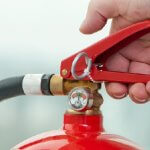
Huddersfield Commercial Fire Extinguishers – Fire safety planning in commercial premises involves many different elements, including fire alarms, emergency lighting, evacuation procedures and staff training. Despite these wider systems, fire extinguishers remain one of the most important first-response tools available to businesses. Across Huddersfield’s diverse commercial sector — which includes offices, manufacturing units, warehouses, schools and retail premises — properly specified extinguishers provide the ability to tackle small fires before they develop into serious incidents.
Many workplace fires begin as relatively minor events. Electrical faults, overheated equipment, flammable liquids or combustible waste can ignite small fires that, if addressed quickly, may be contained before significant damage occurs. Fire extinguishers allow trained staff to intervene safely at the earliest stage, protecting both people and property.
However, effective extinguisher provision requires more than simply installing units throughout a building. Each commercial environment in Huddersfield presents different fire risks, meaning extinguisher selection must be tailored to the activities taking place within the premises. A professional fire risk assessment is typically used to determine which types of extinguishers are appropriate and where they should be located.
Water extinguishers remain one of the most common units used in commercial buildings. These extinguishers are designed for Class A fires involving materials such as wood, paper and textiles. Offices, schools and retail premises often rely on water extinguishers because these materials represent the most common fire risks in such environments. However, water extinguishers cannot safely be used on electrical fires, which means additional extinguisher types are usually required.
Carbon dioxide (CO₂) extinguishers are specifically designed to deal with fires involving electrical equipment. Modern businesses rely heavily on computers, networking equipment, machinery and other electrical systems, all of which present potential fire risks. CO₂ extinguishers are commonly installed near electrical distribution boards, server rooms and equipment areas to provide appropriate protection.
Foam extinguishers are another important option for many workplaces. They are capable of tackling both solid combustible materials and flammable liquids, making them suitable for environments such as workshops, garages or small industrial units. Businesses storing fuels or chemicals in small quantities often rely on foam extinguishers as part of their fire protection strategy.
Correct placement is essential to ensure extinguishers can be accessed quickly in an emergency. In Huddersfield commercial premises, extinguishers are typically located along escape routes and near exits so they can be reached easily without forcing staff to move deeper into the building. This positioning supports safe evacuation while still allowing trained individuals to tackle small fires if appropriate.
Travel distance also plays a role in extinguisher placement. In larger workplaces such as warehouses or manufacturing facilities, multiple extinguishers may be required to ensure coverage across different sections of the building. The aim is to ensure staff never need to travel excessive distances to reach fire-fighting equipment.
Clear signage is also essential. Even if extinguishers are installed correctly, they must be easy to identify quickly in an emergency. Signs positioned above the extinguisher help ensure the equipment can be located immediately, even if visibility is reduced.
Maintenance ensures extinguishers remain reliable. Commercial fire extinguishers must be serviced annually by a competent technician who will check pressure levels, hoses, safety pins and general condition. In addition to professional servicing, businesses should carry out periodic visual checks to ensure extinguishers remain in their designated positions and have not been damaged.
Staff awareness also plays a key role in effective fire safety. Employees should understand the types of extinguishers present in the workplace and the situations in which they may be used. Importantly, staff should also recognise that evacuation is always the priority if a fire cannot be tackled safely.
For Huddersfield businesses, fire extinguishers remain a fundamental component of workplace fire safety. When correctly specified, properly positioned and maintained regularly, they provide a critical first line of defence that can prevent small fires escalating into serious emergencies.