
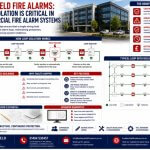
Loop Isolation – Modern commercial fire alarm systems are designed to provide reliable life safety protection even when faults occur within the system infrastructure. One increasingly important feature helping achieve this is loop isolation technology.
For larger commercial premises across Huddersfield, loop isolation helps prevent a single wiring fault from affecting an entire fire alarm loop, significantly improving overall system resilience and operational reliability.
As commercial fire alarm systems become larger and more interconnected, loop isolation is becoming an essential part of modern life safety design.
What Is A Fire Alarm Loop?
Addressable commercial fire alarm systems commonly use detection loops which connect:
- smoke detectors
- heat detectors
- manual call points
- sounders
- interfaces
- and other field devices
back to the fire alarm control panel.
Large commercial systems may contain:
- hundreds of devices
- extensive cabling
- and multiple detection zones
across a single building.
Why Wiring Faults Can Become Serious
Without isolation protection, certain cable faults may affect:
- large sections of detection devices
- sounders
- or entire loop segments
This can reduce system coverage and create operational risk until repairs are completed.
Loop Isolators Help Contain Faults
Loop isolators automatically disconnect the affected section of wiring when faults occur, helping the remainder of the loop continue operating normally.
This means:
- unaffected devices remain operational
- fire detection continues elsewhere
- and disruption is minimised
during fault conditions.
Large Commercial Premises Benefit Most
Loop isolation is particularly important within:
- office complexes
- warehouses
- manufacturing facilities
- hospitals
- schools
- and multi-floor commercial buildings
where extensive wiring infrastructure exists.
Fault Tolerance Improves System Resilience
Modern life safety systems increasingly focus on:
- redundancy
- fault tolerance
- and continuity of protection
Loop isolation supports these objectives by reducing the impact of:
- short circuits
- cable damage
- and wiring failures
Building Work Can Accidentally Damage Cabling
Commercial premises regularly undergo:
- refurbishments
- fit-outs
- maintenance works
- and operational alterations
These activities may occasionally lead to:
- accidental cable damage
- drilling incidents
- or wiring disruption
Loop isolation helps limit the operational impact of these faults.
Faster Fault Identification Supports Maintenance
Many modern systems provide:
- detailed fault reporting
- loop diagnostics
- and device-level monitoring
This helps engineers identify:
- fault locations
- affected sections
- and repair priorities
more efficiently.
System Downtime Can Affect Business Operations
Fire alarm faults may sometimes impact:
- occupancy permissions
- operational continuity
- insurance requirements
- and site management
Reducing fault-related disruption helps businesses maintain:
- safer operations
- stronger compliance
- and reduced downtime
Isolation Devices Must Be Properly Designed
Incorrect loop design or poorly positioned isolation devices may reduce the effectiveness of the protection strategy.
Professional fire alarm design helps ensure:
- correct isolation spacing
- appropriate device placement
- and compliance with relevant standards
Modern Addressable Systems Depend On Reliable Infrastructure
As fire alarm systems become increasingly intelligent, infrastructure reliability becomes just as important as detector technology itself.
Businesses increasingly expect systems to provide:
- dependable operation
- fault resilience
- and continuous life safety coverage
even during partial system faults.
Smarter Fire Alarm Design Improves Long-Term Reliability
For businesses in Huddersfield, loop isolation technology forms an important part of modern commercial fire alarm engineering.
Professional loop isolation design helps provide:
- improved fault tolerance
- reduced disruption
- stronger system resilience
- and more reliable life safety protection
As commercial buildings continue growing in scale and complexity, resilient fire alarm infrastructure is becoming increasingly important for effective long-term fire safety management.
Frequently Asked Questions
What does a fire alarm loop isolator do?
It helps disconnect faulty wiring sections while allowing unaffected parts of the system to continue operating.
Why is loop isolation important?
It improves system resilience and reduces disruption caused by wiring faults.
Are loop isolators used in all fire alarm systems?
They are commonly used in larger addressable commercial fire alarm systems.