
Fire Alarm Extension – Business growth is always positive, but expanding commercial premises brings new responsibilities. Whether you’re adding office space, extending a warehouse, converting unused rooms or fitting out an additional floor, your existing fire alarm system may also need to be extended to maintain effective fire protection.
Many businesses in Huddersfield invest heavily in new workspaces without considering how alterations affect their fire alarm system. Even relatively small changes to a building’s layout can create blind spots, alter escape routes or increase occupancy levels, all of which should be considered as part of the overall fire safety strategy.
Planning fire alarm alterations alongside building work helps avoid delays, unnecessary costs and disruption once the project is complete.
Why Building Alterations Matter
Commercial fire alarm systems are designed around the layout and use of a building at the time they are installed.
When businesses expand, that original design may no longer provide adequate coverage.
Examples include:
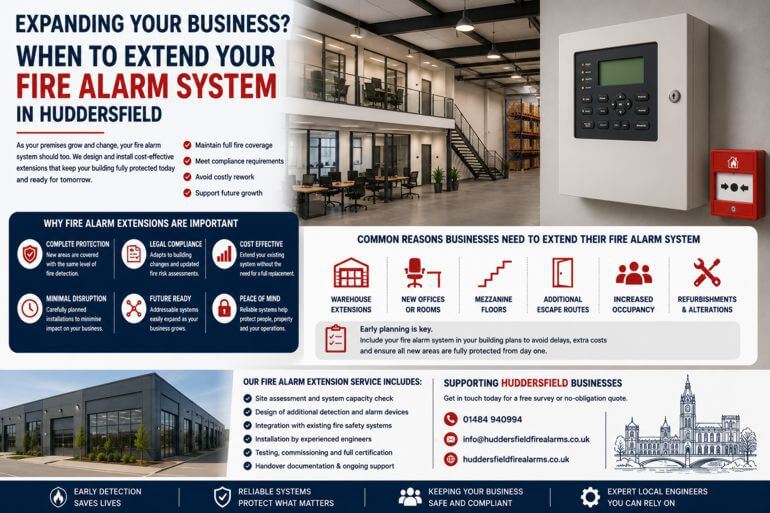
- New offices created within warehouse space.
- Additional meeting rooms.
- Warehouse extensions.
- Mezzanine floors.
- Internal partitions.
- Staff welfare facilities.
- Plant room alterations.
- Additional fire escape routes.
Every change should be reviewed to determine whether extra detectors, sounders or manual call points are required.
Extending Rather Than Replacing
Many businesses assume expansion means replacing the entire fire alarm system.
In reality, modern addressable fire alarm systems are often designed with future growth in mind.
Additional loops, detectors and interfaces can frequently be incorporated into the existing system, reducing installation costs whilst maintaining a consistent level of protection throughout the premises.
A professional assessment will determine whether the current control panel has sufficient capacity or whether an upgrade would provide better long-term value.
Integrating New Areas
As commercial buildings become larger, fire alarm systems often need to interact with other building services.
This may include:
- Automatic door release systems.
- Smoke ventilation.
- Access control.
- Roller shutters.
- Lift controls.
- Disabled refuge systems.
- Building management systems.
Planning these integrations early helps ensure all life safety systems operate together during an emergency.
Avoiding Costly Rework
One of the most common mistakes is leaving fire alarm alterations until after refurbishment has finished.
Installing additional cabling or detection equipment after decoration is complete often increases labour costs and can result in unnecessary disruption to the finished building.
Including the fire alarm system within the early design stages allows equipment locations and cable routes to be planned more efficiently.
Maintaining Compliance
Building alterations may also affect the recommendations contained within your fire risk assessment.
Reviewing the fire alarm system following expansion helps ensure appropriate detection remains in place and supports compliance with current fire safety legislation.
Documenting these changes also provides valuable information for future maintenance and servicing.
Supporting Future Growth
Businesses rarely stop growing after one extension.
Selecting a fire alarm system that allows future expansion can reduce long-term costs and simplify future projects.
Modern addressable systems provide the flexibility to add further devices as your business develops, making them a practical investment for expanding commercial premises.
Fire Alarm Extensions for Huddersfield Businesses
Whether you’re enlarging an office in Huddersfield, extending a warehouse, refurbishing industrial units or creating additional workspace, your fire alarm system should evolve alongside your building.
Professional design, installation and commissioning ensure new areas receive the same level of protection as the existing premises, helping safeguard employees, visitors and business operations while supporting future growth.