
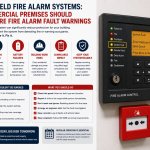
Fire Alarm Fault Warnings – In many commercial buildings across Huddersfield, fire alarm fault warnings are sometimes treated as minor technical issues rather than urgent safety concerns. However, a fault on a commercial fire alarm system can significantly reduce the system’s ability to detect fire, warn occupants or operate correctly during an emergency.
Even temporary faults should always be investigated quickly. A fire alarm system with unresolved issues may leave parts of the building unprotected without staff even realising it.

Fire Alarm Faults Can Disable Critical Protection
Modern commercial fire alarm systems rely on multiple interconnected components working together correctly.
These include:
- detectors
- sounders
- manual call points
- control panels
- power supplies
- communication loops
- and backup batteries
If one part develops a fault, the effectiveness of the entire system may be compromised.
Common Commercial Fire Alarm Faults
Businesses in Huddersfield commonly experience issues such as:
- detector contamination
- damaged devices
- battery failures
- power supply problems
- wiring faults
- loop communication errors
- and accidental isolation of zones
Some faults may appear minor initially but can worsen over time if ignored.
Fault Warnings Should Never Be Reset Without Investigation
One of the biggest mistakes businesses make is repeatedly silencing or resetting fault indicators without identifying the underlying issue.
This can create situations where:
- detectors stop communicating
- sounders fail to activate
- sections of the building lose coverage
- or backup systems no longer operate correctly
Resetting a fault does not remove the cause of the problem.
Battery Failures Are Often Overlooked
Commercial fire alarm systems rely on standby batteries to continue operating during mains power failures.
Over time, batteries naturally degrade and may:
- lose capacity
- fail load testing
- or stop charging properly
Without functional backup batteries, the system may fail completely during power loss.
Dust and Building Work Frequently Cause Problems
Commercial premises undergoing refurbishment or building alterations often experience increased fire alarm faults.
Common causes include:
- construction dust
- accidental cable damage
- detector contamination
- temporary power interruptions
- and isolated zones during works
Systems should always be reviewed carefully during refurbishment projects.
Faults Can Affect Compliance
Commercial fire alarm systems are normally maintained in line with BS 5839 recommendations.
Unresolved faults may:
- compromise legal compliance
- affect insurance expectations
- and increase fire safety risks
Businesses should maintain accurate records of:
- faults identified
- engineer attendance
- corrective actions
- and servicing history
Staff Should Understand Basic Fault Reporting
Employees do not need to be engineers, but responsible staff should recognise:
- fault indicators
- warning messages
- disabled zones
- and abnormal panel behaviour
Prompt reporting significantly reduces the risk of prolonged system impairment.
Regular Servicing Helps Prevent Faults
Routine maintenance plays a major role in reducing system failures.
Professional servicing typically includes:
- detector testing
- battery inspection
- panel diagnostics
- device cleaning
- sounder testing
- and fault log reviews
Early identification helps prevent small issues from escalating into major failures.
False Alarms and Faults Are Often Linked
Poorly maintained systems may experience both:
- increased false alarms
- and higher fault rates
Dirty detectors, ageing components and wiring issues can affect overall system reliability.
Temporary Faults Can Become Permanent Problems
Intermittent issues are particularly dangerous because they are often ignored.
Examples include:
- occasional communication failures
- brief power interruptions
- random detector faults
- or sporadic sounder problems
These issues can eventually lead to complete device failure if left unresolved.
Fire Alarm Panels Provide Important Information
Modern fire alarm panels are designed to display:
- fault locations
- affected zones
- device information
- and system status
Businesses should ensure responsible personnel know how to interpret basic warnings and when to contact engineers.
Reliable Fire Alarm Systems Depend on Ongoing Attention
A commercial fire alarm system should never be treated as “install and forget” equipment.
For businesses in Huddersfield, responding quickly to fault warnings helps ensure:
- continuous protection
- safer evacuation
- stronger compliance
- and improved reliability
Even minor faults should be taken seriously. Prompt investigation and professional maintenance ensure fire alarm systems remain fully operational when they are needed most.
Frequently Asked Questions
What does a fire alarm fault warning mean?
It usually indicates a problem affecting part of the system, such as detectors, wiring, power supplies or communication loops.
Can a fire alarm still work with a fault showing?
Possibly, but parts of the system may not operate correctly. Faults should always be investigated promptly.
How often should commercial fire alarms be serviced?
Commercial fire alarm systems should receive regular professional servicing alongside routine user testing.